
- 18335 E 103rd Ave #103, Commerce City, CO 80022
- 303 853 9955
- Info@fcpediatricdentistry.com
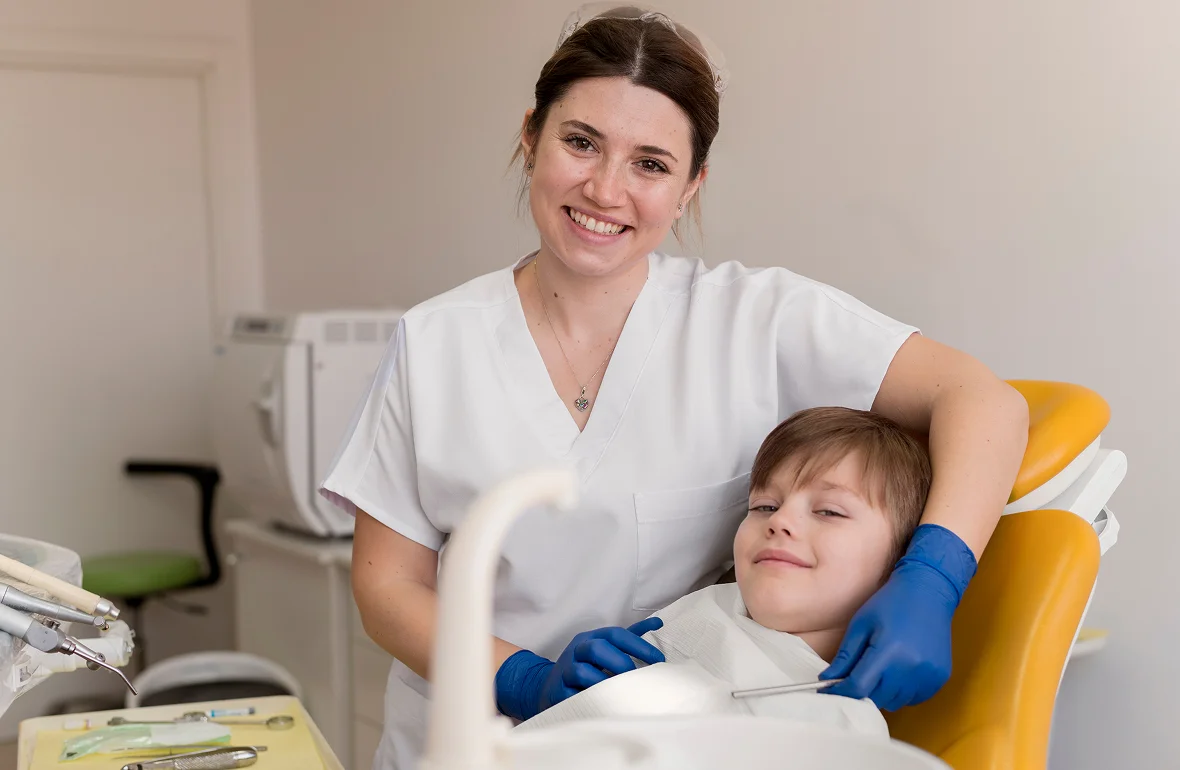
A pediatric space maintainer helps keep the right amount of space in your child’s mouth after a baby tooth is lost too early. At First Class Pediatric Dentistry, we provide space maintainers for children in Commerce City to support healthy tooth alignment and proper dental development.
Baby teeth play an important role in guiding adult teeth into the correct position. When a baby tooth is lost early due to decay or injury, nearby teeth may shift into the empty space. A space maintainer helps prevent this movement and protects your child’s future smile. Our pediatric dental team explains each step so parents feel informed and children feel comfortable.
A pediatric space maintainer is a small dental appliance that holds space open when a baby tooth is lost too soon. It allows the permanent tooth to come in naturally.
Space maintainers support proper tooth spacing and jaw development. They are custom made for each child and designed to be comfortable while doing an important job.
Baby teeth may be lost early due to cavities, infection, or injury. When this happens, nearby teeth can drift and block adult teeth from erupting properly.
By holding the correct space, a space maintainer helps reduce crowding and lowers the chance of future orthodontic issues.
Routine visits like pediatric dental cleanings and exams help identify early tooth loss and treatment needs.
Fixed space maintainers stay in place until the permanent tooth erupts. Common types include band and loop, crown and loop, and distal shoe appliances.
Removable space maintainers are used in select cases. They can be taken out for cleaning but require good cooperation from the child.
The best option depends on which tooth was lost, your child’s age, and how long it will take for the permanent tooth to come in.
Preventive care such as dental sealants for kids can help lower the risk of early tooth loss.
First, the dentist examines your child’s mouth and reviews dental images. Measurements or impressions are taken, and the space maintainer is custom fitted. Once placed, the dentist checks comfort and function.
If early tooth loss happened due to decay, treatment such as pediatric dental fillings or dental crowns for kids may also be discussed.
Placing a space maintainer is usually not painful. Children may feel mild pressure at first, but most adjust quickly. Our team uses gentle techniques and explains everything in kid-friendly language.
For anxious children, nitrous oxide pediatric dentistry may be an option to help them relax during visits.
A space maintainer stays in place until the permanent tooth begins to erupt. Regular dental visits allow the dentist to monitor growth and remove the appliance at the right time.
Good brushing and flossing help keep the space maintainer clean. Sticky or hard foods should be avoided to prevent damage.
Call the dental office if the space maintainer feels loose, causes discomfort, or breaks.
Fluoride treatments can also help protect surrounding teeth.
The cost depends on the type of space maintainer and how long it is needed. We review all fees before treatment begins.
Many dental insurance plans help cover space maintainers. We assist families in understanding benefits and planning affordable care.
Without a space maintainer, teeth may shift and cause crowding or bite problems later.
When a baby tooth is removed early, a space maintainer often helps protect the space.
Preventive care like fluoride, sealants, and regular checkups can lower the risk of early tooth loss.
We understand how children’s teeth grow and change.
Our goal is to protect future smiles and avoid bigger problems later.
We explain treatment options and aftercare in simple terms.
Not always. The dentist will determine if one is needed.
Yes. They are designed specifically for children.
Yes, with some food restrictions.
Until the permanent tooth begins to erupt.
Contact the dentist for an adjustment.

If your child has lost a baby tooth early, a space maintainer may help protect their future smile. Contact First Class Pediatric Dentistry to schedule a consultation and learn the best option for your child.